Site logoSite logo
Order a Free Sample

Why cork

The floor beneath every other floor
is a decision most people never make.

What it feels like

Stand in your kitchen
for an hour.
Then do it on cork.

Every cubic centimetre of cork contains approximately 200 million air-filled cells. Each one compresses under pressure and returns to its original shape. The effect is a floor that absorbs impact rather than transferring it through your ankles, knees, and lower back.

LVT is rigid PVC with a printed image on top. Laminate is compressed wood fibre bonded to a photograph. Both are hard surfaces that return every footstep back into your body. Cork does not.

This is not a comfort feature. It is a structural difference in the material itself.

Cork flooring comfort

What it changes

Cold floors are a choice.
You can make a different one.

Cork is a natural thermal insulator. Its cellular structure traps air in millions of sealed pockets, which means the surface does not conduct cold from the subfloor into the room. In winter, cork feels warm to bare feet. In summer, it stays cool. The material does not chase the temperature of the room. It holds its own.

Laminate and LVT conduct heat away from your body on contact. That cold shock at 6am is not the room temperature. It is the floor pulling warmth out of your skin.

Cork does the opposite.

Cork thermal insulation

What disappears

The sound of nothing
is the sound of cork.

Cork absorbs impact sound by up to 19 decibels. For context, that is the difference between hearing every footstep in the room above you and hearing nothing at all.

The cellular structure works like acoustic foam built into the floor itself. No separate underlay needed. No compromise between appearance and performance.

Laminate is the loudest floor on the market. Every step echoes. Every chair scrape carries. LVT is quieter than laminate but louder than carpet. Cork is quieter than all of them, including carpet, for impact noise.

If you have ever lived below a laminate floor, you already understand why this matters.

Cork sound absorption

What it costs the planet

250 million square metres of flooring
end up in European landfill. Every year.

That is the real price of cheap flooring. Not the number on the label. The number in the ground.

LVT is polyvinyl chloride. PVC. A petroleum-derived plastic that does not biodegrade. When it reaches the end of its life (8 to 12 years, on average), it sits in landfill for centuries. The chlorine in PVC releases toxic compounds during manufacture and incineration. It cannot be meaningfully recycled at scale.

Laminate is marginally better. The wood fibre core comes from felled trees, and the resin binders are formaldehyde-based. The decorative layer is a photograph sealed under melamine. It cannot be composted or recycled. When it wears out, it goes in the skip.

Real wood sounds natural, and it is. But every solid wood and engineered wood floor requires a tree to be cut down. Hardwood forests take 40 to 80 years to regenerate. The ecological cost is not the tree itself. It is the habitat, the root systems, the canopy, the species that depended on it. That damage is invisible on the showroom floor.

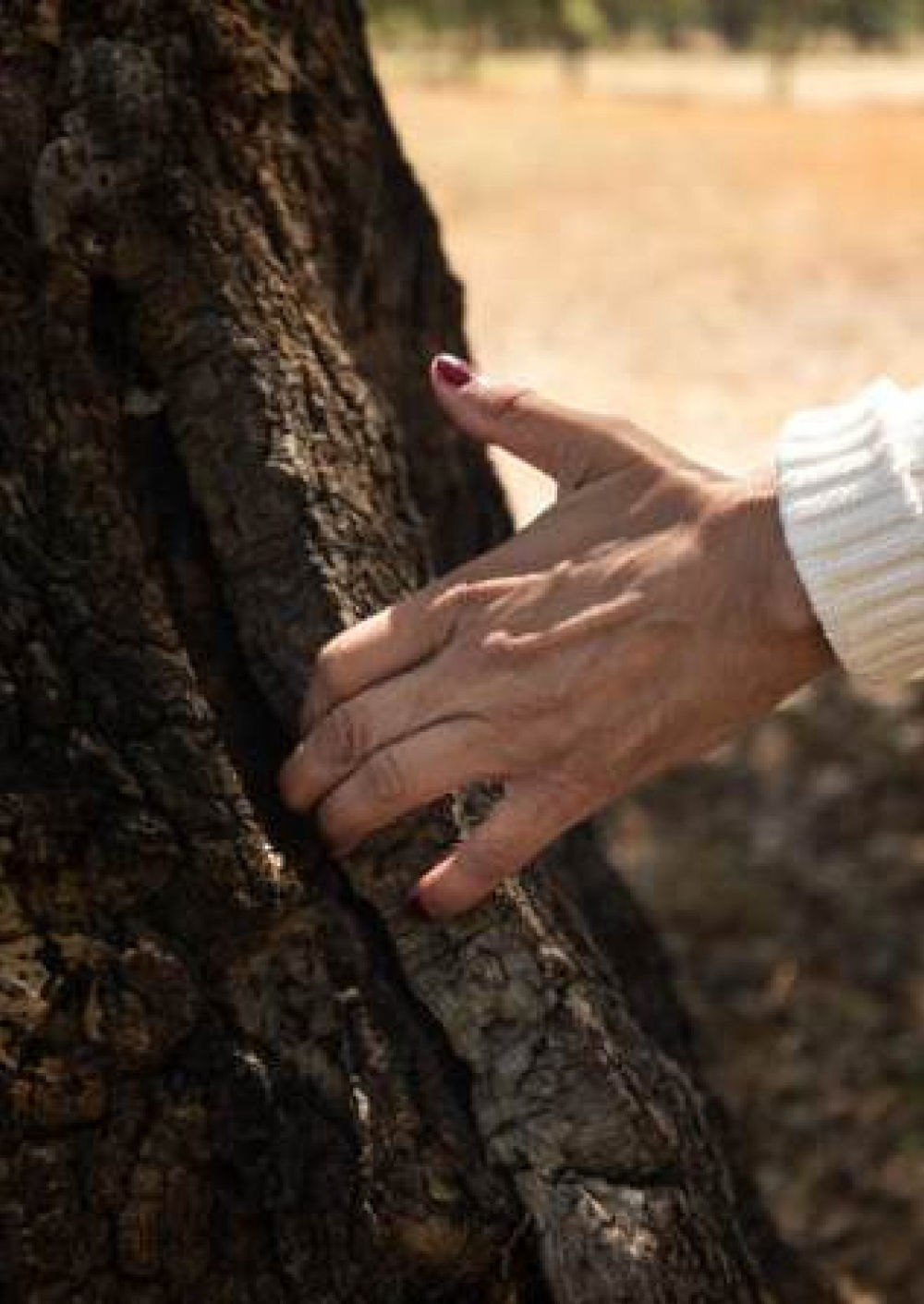
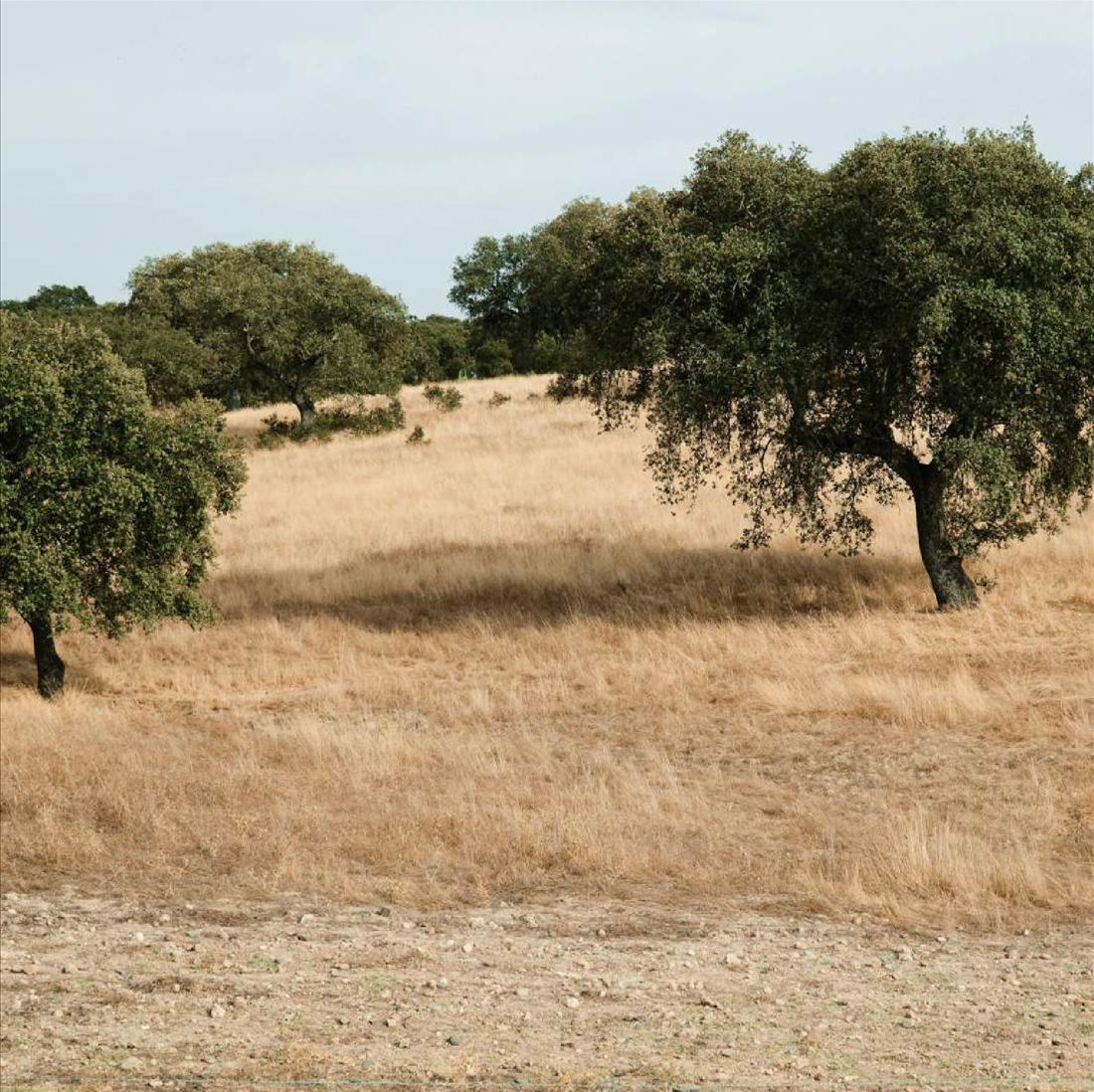
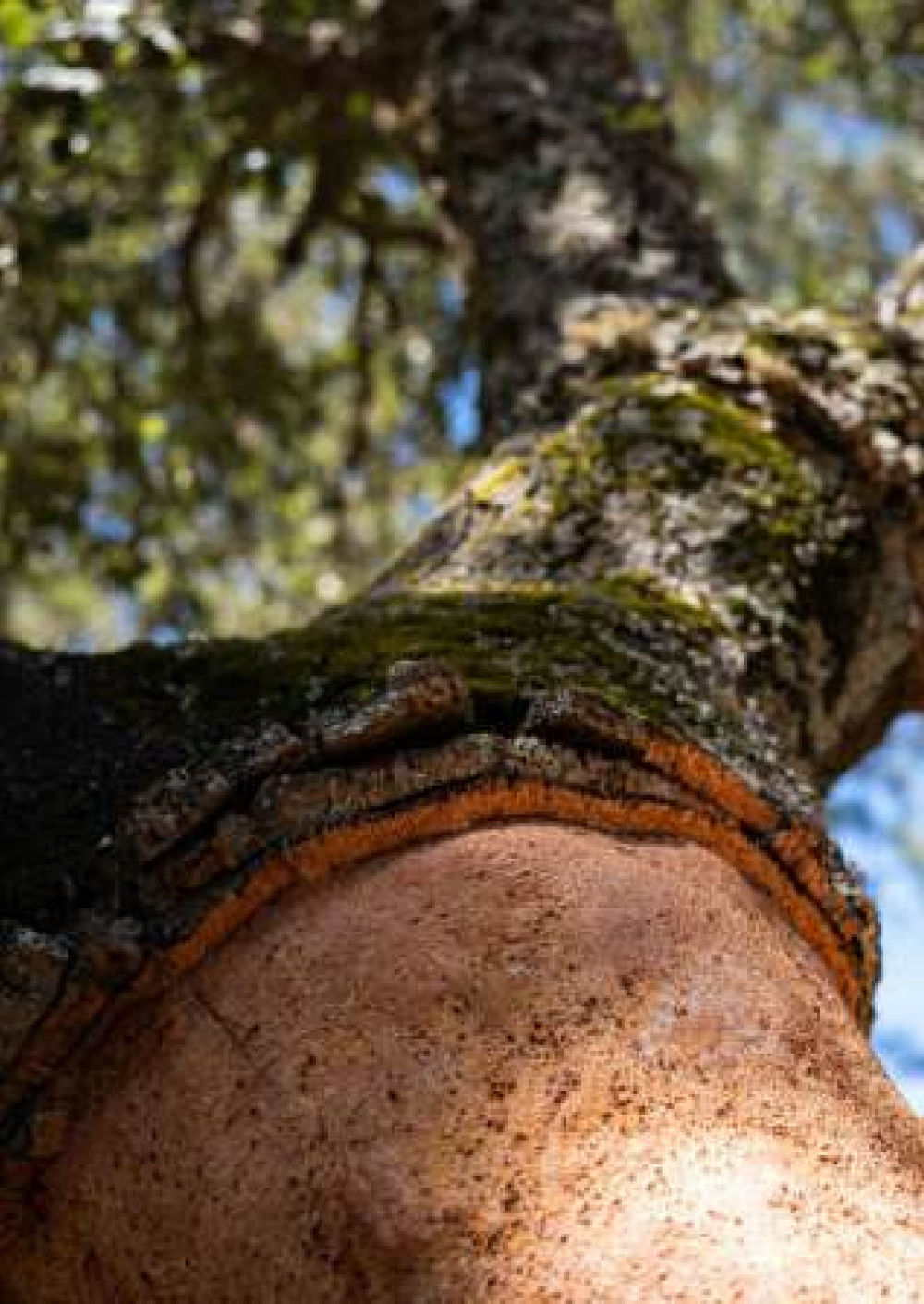
Cork is harvested from the bark of the cork oak. The tree is never felled. It continues to grow. A single cork oak lives for over 200 years, and a harvested tree absorbs 3 to 5 times more CO2 than an unharvested one. The bark regrows in nine years. The forests support over 200 species of animals and plants across the Mediterranean. The material biodegrades completely.

This is not a sustainability story. It is a material fact.

Cork oak forest

The details that matter.

How the materials compare.

We are honest about what cork does well and where other materials have advantages. The right floor depends on your priorities.

Property Cork (Natrul) Laminate LVT
Comfort underfoot Natural cushioning from 200M air cells per cm3. Absorbs impact, gentle on joints. Hard surface. No give. Impact transfers directly into the body. Rigid PVC. Marginally softer than laminate with underlay, but no natural cushioning.
Thermal insulation Naturally warm. Does not conduct cold from the subfloor. Cold to the touch. Conducts subfloor temperature. Cold to the touch. Adapts to subfloor temperature quickly.
Sound absorption Up to 19dB impact sound reduction. Built-in acoustic performance. Loudest floor type. Echoes and amplifies footsteps. Quieter than laminate. Still louder than cork for impact noise.
Durability 25 to 30 year lifespan. Minor dents self-recover. 8 to 15 years typical. Cannot be repaired. 10 to 20 years typical. Susceptible to indentation from heavy furniture.
Moisture Moisture-resistant (suberin). Not waterproof. Suitable for kitchens. Poor moisture resistance. Swells and warps with water exposure. Fully waterproof surface. Best choice for wet areas.
Environmental impact Harvested from living trees. Biodegradable. Carbon-negative lifecycle. Felled trees. Formaldehyde binders. Non-recyclable. Landfill end-of-life. Petroleum-based PVC. Non-biodegradable. Centuries in landfill.
Installation Click system (Uniclic). DIY-friendly. Over existing floors. Click system. DIY-friendly. Click or glue-down. DIY-friendly for click.
Upfront cost Higher initial investment. Lower. Budget-friendly. Moderate. Wide price range.
Cost over 30 years One purchase. No replacement. Approx. 2.80 per m2 per year. 2 to 3 replacements needed. Higher total cost. 1 to 2 replacements needed. Higher total cost.
Maintenance Vacuum and damp mop. No resealing ever. Vacuum and damp mop. Vacuum and damp mop.
Air quality No VOCs. No formaldehyde. Hypoallergenic. Contains formaldehyde binders. Off-gassing possible. PVC off-gassing. Plasticisers (phthalates) in some products.
Pet suitability Natural cushioning supports joints. Warm surface for resting. Quiet under paws. Closest to natural ground feel. Hard surface. No joint support. Cold. Loud under claws. Hard PVC surface. No joint cushioning. Cold underfoot for animals. Scratch-resistant.

Cork is not the right choice for every room or every budget. But when you compare total cost, environmental impact, and the experience of living on the floor for years, the calculation changes.

Feel it for yourself.

A sample tells you more than a website ever can.